

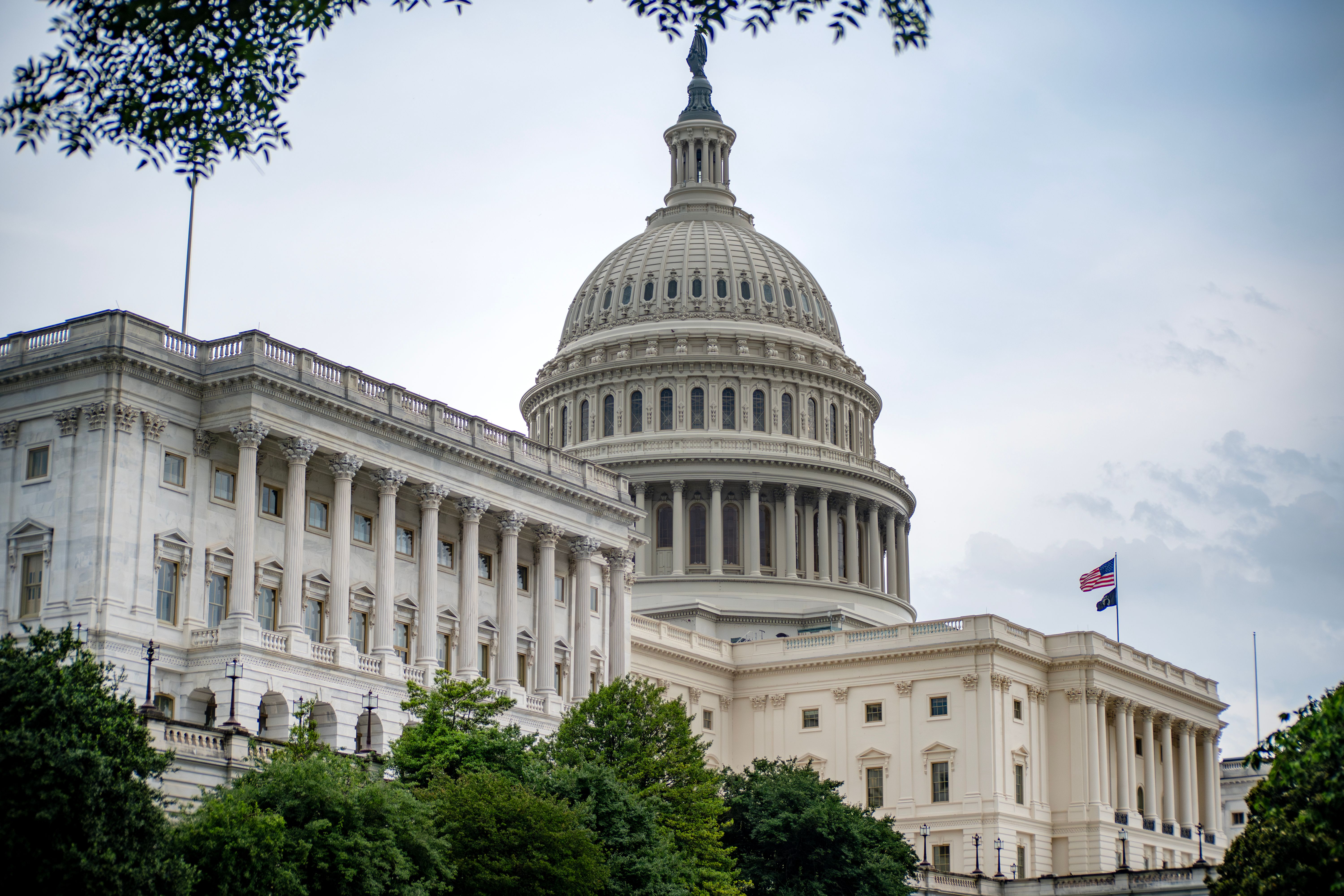
As of this writing, the Digital Asset Market Clarity Act has cleared the House, advanced through the Senate Banking Committee on a 15–9 bipartisan vote, and sat on the Senate's legislative calendar for over three months. It still hasn't passed. The Senate adjourned for its August recess without a final floor vote, but Majority Leader John Thune filed cloture on the motion to proceed before leaving, setting up a procedural vote for 15 September 2026, not a final passage vote, but the first formal step toward one. Republicans need roughly six Democratic crossovers to clear the 60-vote threshold, a gap that hadn't closed as of mid-August.
That leaves the bill in an in-between state: alive and moving, but without a settled framework a business can plan against yet. For a US finance business trying to plan around it, the vote count matters less than three structural questions embedded in the bill, and one cautionary precedent about what happens even if it passes.
Where the bill actually stands
H.R. 3633, the Digital Asset Market Clarity Act, passed the House in July 2025 with substantial bipartisan support. The Senate took a different, slower path: the Banking Committee and the Agriculture Committee each produced their own versions, reflecting a genuine jurisdictional split between the two committees' oversight (Banking over the SEC, Agriculture over the CFTC) that mirrors the bill's core subject matter. The Banking Committee's version advanced in May 2026. A Republican draft in July 2026 added ethics provisions restricting digital-asset dealings by federal officials; Democrats rejected the language within hours, and that dispute remains a live sticking point.
Both committee-passed versions still need to be reconciled with each other, then with the House-passed text, before a final bill reaches the President. None of that happened before the August recess.
The jurisdictional split that matters more than the vote count
CLARITY's central purpose is dividing regulatory authority between the SEC and the CFTC based on whether a digital asset counts as a security or a "digital commodity." That classification question is where most of the bill's real substance sits, and it's also where a business's actual compliance exposure would land if the bill becomes law: an asset classified as a digital commodity falls under CFTC oversight, with a different registration, disclosure, and custody regime than one classified as a security under the SEC.
This split already exists in practice, informally, through a joint SEC-CFTC interpretation issued in March 2026 that offered guidance classifying certain assets as digital commodities ahead of any statute. But that guidance carries the legal weight of agency interpretation, which sits well below a statute in durability: following the Supreme Court's 2024 Loper Bright decision curtailing Chevron deference, interpretive guidance like this is markedly more exposed to court challenge or reversal under a future administration. CLARITY's aim is to lock that classification into statute instead, removing it from whichever commission currently holds the interpretive pen.
The stablecoin yield loophole
The American Bankers Association has pushed to use CLARITY to close a specific gap left by the GENIUS Act: the 2025 law banned interest or yield payments on payment stablecoins, but the ABA argues some digital-asset service providers, particularly exchanges, have found ways to offer interest-like rewards that functionally sidestep the ban. Lawmakers have floated compromise language allowing rewards tied to specific transactional activity while still prohibiting a straightforward yield payment for simply holding a balance; the ABA's position, as of the May 2026 markup, was that this compromise leaves too much room for the workaround it's meant to close.
For a payments or banking business, this detail matters regardless of which side of the debate you land on: if CLARITY passes with the compromise language intact, the line between a permitted transactional reward and a prohibited yield payment will be a live interpretive question from day one, resolved case by case rather than settled by the statute itself.
Passage isn't the finish line
Here's the part worth sitting with before treating eventual passage as an end point. The GENIUS Act, signed into law in July 2025, gave federal stablecoin regulators one year to issue implementing rules. That deadline landed on 18 July 2026. It came and went with the Federal Reserve, the OCC, the FDIC, and the Treasury Department all still holding proposed rules rather than final ones, after issuing ten notices of proposed rulemaking without completing a single one. Missing the deadline doesn't invalidate the law, but a full year after enactment, the actual implementing detail businesses need to comply with still didn't exist.
CLARITY would make the CFTC the primary regulator for digital commodities, and the CFTC currently operates with a single sitting commissioner and an unfunded budget request. If CLARITY passes, the realistic estimate for full rulemaking runs one to three years, working through an agency that's already stretched thin on existing responsibilities. Passage and enforceable clarity are two different milestones, separated by exactly the kind of gap the GENIUS Act's first year just demonstrated.
What to actually do while this is unresolved
There's no compliance deadline to react to yet, so treat this as a watching brief:
- Track the jurisdictional language specifically, not just the pass/fail headline. The exact wording defining a "digital commodity" versus a security will determine which regulator, and which rulebook, applies to a given asset or activity.
- Watch CFTC funding and staffing as a leading indicator. An unfunded budget request and a single commissioner are structural constraints on how fast any post-passage rulemaking can actually move, independent of the statute's own timeline.
- Watch 15 September 2026 as the next concrete checkpoint, not a resolution date. That's when the Senate's cloture vote on the motion to proceed is scheduled, a procedural step that opens debate, not a final vote on the bill itself.
- Watch the stablecoin yield/reward language specifically if you operate in that space. The distinction between a permitted transactional reward and a prohibited yield payment is exactly the kind of detail that gets litigated after the fact if the statutory language stays ambiguous.
Related reading: Stablecoin Rules Under MiCA: What the EMT/ART Regime Means for Payment Businesses · MiCA CASP authorisation: what payment & OTC firms must have ready to go live in the EU · What Is a Stablecoin? Types, Backing and How They Stay Pegged